

How Warehouse Mezzanine Systems Can Expand Usable Space
Running out of room in your warehouse? Before you commit to costly renovations or sign a lease on a bigger facility, consider looking up to achieve your space goals. Warehouse mezzanine systems, available through our Knoxville, Chattanooga, Nashville, and Seattle branches, offer an innovative way to maximize vertical space, adding valuable square footage without expanding your building’s footprint.
These elevated structures create additional levels within your existing space, essentially doubling your usable area. Whether you need more storage capacity, office space, or specialized work areas, warehouse expansion solutions like mezzanines deliver results faster and more affordably than traditional construction. Below, we’ll explore how industrial mezzanine platforms work, their key benefits, common applications, and the structural considerations you need to know before installation.
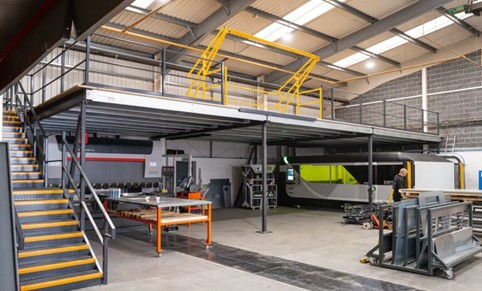
What Is a Warehouse Mezzanine?
A warehouse mezzanine is an elevated platform that creates a partial second story within your facility. Think of it as an intermediate floor between your ground level and ceiling. Unlike permanent building additions, mezzanines are typically freestanding structures made from steel beams and joists.
These platforms vary widely in size and configuration. A mezzanine might span your entire warehouse floor or serve as a compact work platform in one corner. Some resemble catwalks that provide access to equipment, while others function as full-scale storage or office levels.
The best feature of mezzanines is that they make use of vertical space that would otherwise go unused. If your facility has high ceilings, typically 16 feet or more, you’re sitting on untapped real estate. A properly designed mezzanine transforms that empty air into productive square footage.
Key Benefits of Mezzanine Storage Solutions
Warehouse space optimization through mezzanines offers several compelling advantages. These include:
- Double Your Capacity Without Moving – Installing a mezzanine can nearly double your facility’s usable space. For landlocked warehouses or businesses locked into long-term leases, this expansion happens within your current four walls. No need to relocate inventory, retrain staff on new layouts, or disrupt daily operations with a move.
- Cost-Effective Compared to Building Expansions – Tearing down walls, pouring new foundations, and adding onto your building requires major investment. You’ll need architects, general contractors, extensive permits, and months of construction. Mezzanines cost roughly half what you’d spend on equivalent square footage from a traditional building expansion. Pre-engineered systems arrive ready to install, cutting both time and expense.
- Minimal Downtime With Quick Installation – A typical 15×30-foot mezzanine can be assembled in about a week. Compare that to the months required for conventional construction. Your warehouse stays operational throughout installation, and you’re using your new space almost immediately.
- Flexible and Relocatable – Unlike permanent construction, mezzanines can be disassembled and moved if you eventually relocate to a different facility. This flexibility protects your investment and adapts to your company’s evolution.
- Improved Safety and Organization – Beyond adding space, mezzanines enhance workflow. They eliminate the need for workers to use lifts or ladders for elevated tasks, reducing fall risks. You can dedicate specific levels to different functions (offices on top, storage below), creating clearer organization and more efficient operations.
Uses of Warehouse Mezzanine Systems
Mezzanine storage solutions adapt to numerous warehouse functions. Uses of mezzanine systems include:
- Additional Storage Space – The most common application is more room for inventory. Stack pallets, install shelving, or create dedicated zones for different product lines. The elevated level keeps items organized and accessible without consuming valuable floor space.
- Office Space Above Production Floors – Need administrative space but don’t want to sacrifice storage area? With mezzanine modular offices, managers maintain visibility over warehouse operations while workers below keep their whole floor area for production and material handling.
- Work Platforms and Access Points – Mezzanines provide stable platforms for tasks that previously required lifts or scaffolding. Food processing facilities use them to inspect and service equipment. Manufacturing plants position them near machinery that requires regular maintenance or monitoring from above.
- Multi-Level Operations – Some warehouses install multi-level mezzanines, creating tower-like structures with platforms at several heights. These work well for complex production processes or when multiple access points are needed around tall equipment.
- Quality Control Stations – Elevated platforms offer ideal vantage points for quality inspectors. They can oversee production lines, conduct visual inspections, and maintain oversight without interfering with floor-level activities.
Key Structural Considerations Before Installing a Mezzanine
While mezzanines offer significant benefits, a successful installation depends on careful planning and structural assessment. Before installing industrial mezzanine platforms, evaluate these key factors:
- Ceiling Height Requirements – Industry standards require at least eight feet of space from floor to mezzanine and another eight feet from mezzanine to ceiling. This means facilities with ceilings lower than 16 feet typically can’t accommodate mezzanines effectively.
- Foundation and Floor Load Capacity – Mezzanines transfer substantial weight to your floor. Most commercial concrete slabs built in recent decades handle these loads without issue, but older facilities may need reinforcement. A structural engineer should evaluate your foundation’s capacity before installation.
- Column Placement and Spanning – Mezzanines require support columns, though engineers can minimize their number through strategic design. Discuss your floor plan with Bailey to determine optimal column placement that maximizes usable space while providing necessary support.
- Permits and Building Codes – Bailey’s pre-engineered mezzanines simplify the permitting process compared to custom construction. Most jurisdictions focus on life safety, ensuring adequate exits, fire protection, and evacuation routes. Working with experienced installers who understand local codes helps navigate requirements smoothly.
- Indoor vs. Outdoor Installation – While most mezzanines go inside climate-controlled facilities, outdoor installation is possible. However, exterior mezzanines require galvanized steel to withstand weather exposure. The galvanizing process significantly increases costs, so outdoor applications make sense only when indoor options aren’t viable.
Expand Your Warehouse Capacity With a Mezzanine System
Warehouse growth shouldn’t always mean a bigger building. When you’re facing capacity constraints, warehouse mezzanine systems provide a practical path forward. They deliver substantial square footage increases at a fraction of traditional expansion costs, install quickly with minimal disruption, and adapt as your business evolves.
Are you ready to explore how mezzanines could transform your warehouse? Contact Bailey today to schedule a site evaluation and learn what’s possible within your existing facility.