Guide to Dock Equipment

High-Functioning Loading Dock
Your loading dock is a system of interconnected parts, each serving a vital purpose. Understanding these core components is the first step toward optimizing your workflow and enhancing safety.
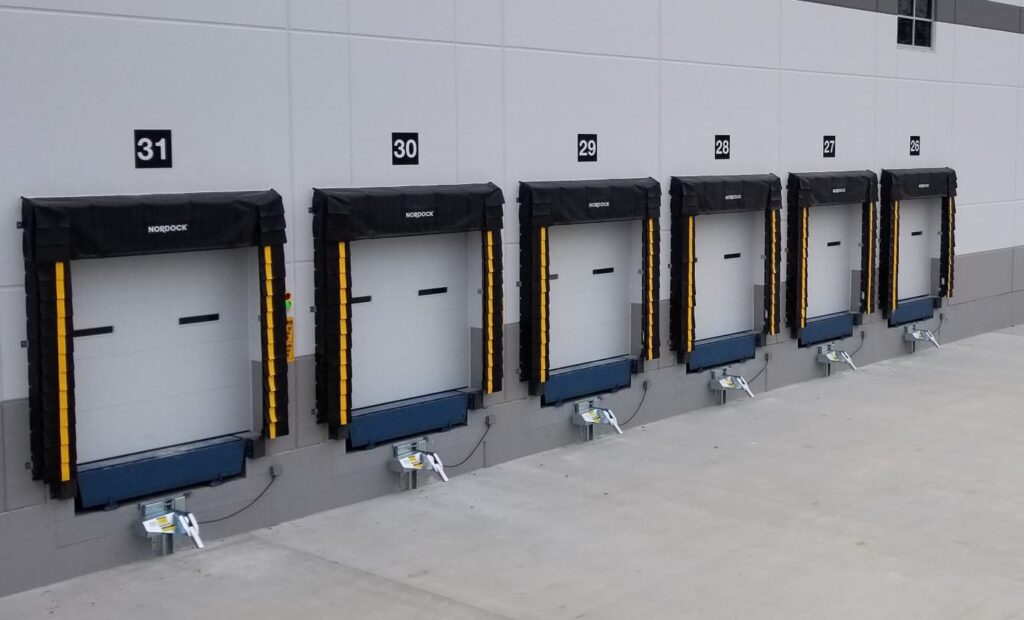
Dock Equipment
-
Dock Levelers
A dock leveler is a hinged ramp that bridges the gap between the warehouse floor and the bed of a trailer. This allows forklifts and other material handling equipment to move in and out of the truck safely and smoothly.
- Mechanical Levelers: A cost-effective and reliable option operated manually with a pull-chain. They are ideal for facilities with lower traffic volumes.
- Hydraulic Levelers: The industry standard for high-volume docks, operated with a push-button for automated, smooth positioning. They offer superior reliability and a lower total cost of ownership.
- Air-Powered Levelers: An alternative to hydraulics, using an airbag system to raise and lower the platform. They provide a reliable middle ground in terms of cost and functionality.
Choosing the right dock leveler depends on your facility's traffic, budget, and operational needs.
-
Dock Bumpers
Dock bumpers are designed to absorb the impact of a trailer backing into the dock, protecting the building wall, foundation, and the truck itself from damage.
- Laminated Bumpers: Constructed from layers of recycled tire fabric, offering excellent impact absorption for most applications.
- Molded Bumpers: Made from solid rubber, providing durable protection in high-traffic environments.
- Steel-Faced Bumpers: Combine the resilience of rubber with a steel plate for maximum durability, ideal for docks with heavy and constant traffic.
Properly selected and installed bumpers are a small investment that prevents costly structural repairs down the line.
-
Dock Seals and Shelters
Dock seals and shelters create an environmental barrier between the trailer and the building, improving energy efficiency, protecting products from the elements, and enhancing employee comfort.
- Dock Seals: Foam pads that compress around the top and sides of the trailer, creating a tight seal. They are best for docks that service trucks of a consistent size.
- Dock Shelters: A more flexible solution with side and top curtains that create a seal around the perimeter of the trailer. They can accommodate a wider variety of truck heights and widths.
By controlling your dock's environment, you can reduce energy costs and protect your inventory from weather damage.

The Right Dock Equipment
-
01
Volume and Frequency:
How many trucks do you service daily? High-volume docks in places like Nashville, Knoxville, or the Tri-Cities region benefit from automated, heavy-duty equipment like hydraulic levelers. -
02
Vehicle Variety:
What types of trucks visit your dock? If you handle a wide range of trailer sizes, a dock shelter offers more versatility than a seal. -
03
Load Characteristics:
Are your loads heavy, fragile, or temperature-sensitive? This will influence the capacity of your leveler and the need for environmental controls. -
04
Budget:
While upfront cost is a factor, consider the total cost of ownership, including maintenance and potential downtime. Investing in higher-quality equipment often pays off in the long run. -
05
Safety Goals:
What are your biggest safety concerns? Vehicle restraints and communication systems are essential for preventing the most common and dangerous dock accidents.
Dock Leveler Maintenance Tips and Safety
Regular maintenance is essential for ensuring the reliability and safety of your loading dock. A proactive approach minimizes downtime and prevents accidents.
Maintenance Checklist:
- Daily Inspection: Check for debris, visible damage, and proper operation before the start of each shift.
- Monthly Cleaning: Keep the leveler pit clean of dirt and debris to ensure smooth operation.
- Quarterly Lubrication: Lubricate all moving parts according to the manufacturer’s specifications.
- Annual Professional Service: Schedule an annual inspection with a qualified technician. Our deep technical service team at Bailey can identify and address wear and tear before it becomes a major problem.
Industrial Dock Safety Considerations:
- Train Your Team: Ensure all forklift operators and dock personnel are trained on proper operating procedures and safety protocols.
- Clear Communication: Use a clear system of communication, like dock lights and horns, between truck drivers and warehouse staff.
- Keep it Clean: Maintain a clean, dry, and unobstructed dock area to prevent slips, trips, and falls.
- Secure the Trailer: Always use vehicle restraints or wheel chocks to ensure the trailer is securely positioned before beginning operations.
Why Bailey?
Bailey is your trusted partner for material handling solutions across Tennessee, Kentucky, Georgia, Virginia, Washington, and across the nation. With decades of hands-on experience, technical expertise, and a deep understanding of regional business needs, we help companies optimize operations, improve efficiency, and reduce downtime.
Our team delivers tailored solutions that match your facility, workflows, and goals. From warehouse equipment to automation and service, we provide reliable, high-quality solutions that support long-term success. As a family- and women-owned business, we prioritize relationships, integrity, and customer satisfaction in every interaction.
Sustainability is more than a goal—it’s a standard at Bailey. We operate responsibly, continuously seeking ways to improve environmental impact while helping your business thrive. With fast, dependable support and a full-service approach, Bailey is the partner businesses choose when performance matters.

Ready to Get Started?
Our Insights
-
07.12.2024
Warehouse Racking Success | Case Study
Case Studies, One Material Handling Solution -
 05.07.2024
Bailey Sponsors Walk Bike Nashville’s 20th Annual Tour de Nash
Life at Bailey, Sustainability -
 07.24.2023
Bailey Wins 2023 Governor’s Environmental Stewardship Award in Sustainable Performance
Sustainability