

What Types of Forklifts Are Used in Seattle Warehouses?
Warehouses throughout Seattle and the Puget Sound region depend on the right equipment to keep products moving efficiently. From distribution centers and fulfillment operations to logistics facilities and industrial warehouses, businesses rely on forklifts and material handling equipment to improve productivity, maximize storage capacity, and support daily operations.
Choosing the right forklift depends on the type of facility, aisle width, storage configuration, product weights, and operational requirements.
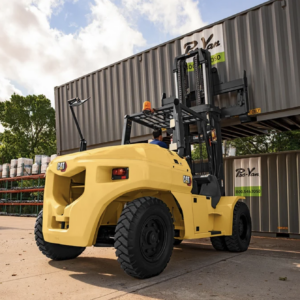
Electric Forklifts for Indoor Warehouse Operations
Electric forklifts are among the most commonly used forklift types in Seattle-area warehouses. Their quiet operation, zero emissions, and maneuverability make them ideal for indoor environments where efficiency and cleanliness are critical.
Electric forklifts are frequently used in:
- Distribution centers
- Retail warehouses
- E-commerce fulfillment operations
- Food and beverage facilities
- Manufacturing environments
Reach Trucks for High-Density Storage
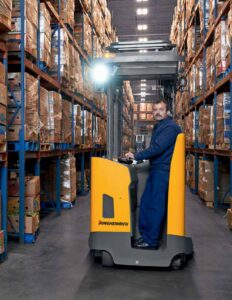
Many Seattle warehouses use reach trucks to maximize vertical storage capacity. These specialized forklifts allow operators to safely access products stored on high racking systems while maintaining efficiency in narrow aisle environments.
Reach trucks are commonly found in:
- High-bay warehouses
- Distribution facilities
- E-commerce operations
- Logistics centers
Warehouses looking to maximize storage capacity often combine reach trucks with professionally designed warehouse racking systems.
Order Pickers for Fulfillment Operations
As e-commerce continues to drive warehouse activity throughout the Puget Sound region, order pickers have become increasingly important for fulfillment operations.
Order pickers help facilities:
- Increase picking speed
- Improve inventory access
- Reduce travel time
- Support accurate order fulfillment
These machines are particularly common in large fulfillment centers throughout Seattle, Kent, and Tacoma.
Pallet Jacks & Walkie Stackers
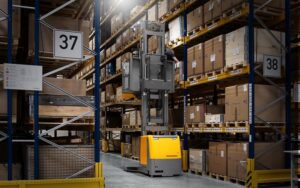
Not every operation requires a traditional forklift. Many Seattle-area businesses utilize pallet jacks and walkie stackers for inventory movement, warehouse organization, and shorter transport distances.
These solutions are ideal for:
- Retail storage facilities
- Distribution centers
- Manufacturing operations
- Warehouse support tasks
Choosing the Right Forklift for Your Operation
Every facility has unique requirements.
Factors to consider include:
- Warehouse layout
- Product dimensions
- Lift height requirements
- Indoor or outdoor applications
- Storage density
- Throughput goals
Operations throughout Seattle, Kent, and Tacoma often utilize a combination of forklift types to support different applications within the same facility.
Beyond Forklifts: Complete Material Handling Solutions
Forklifts are only one component of an efficient warehouse operation.
Businesses throughout the Seattle area often improve productivity through:
- Warehouse Racking Systems
- Warehouse Automation
- Conveyor Systems
- Fleet Management
- Forklift Service & Maintenance
By integrating equipment, storage systems, and automation technologies, organizations can improve throughput, maximize storage capacity, and support long-term growth.
Supporting Warehousing Operations Throughout Puget Sound
From warehouses in Seattle to distribution centers in Kent and logistics operations in Tacoma, Bailey Equipment helps businesses select the right material handling equipment for their specific applications.
Explore additional resources: