Forklift tire maintenance is crucial for avoiding expensive repairs and ensuring safe working conditions. Unlike an automobile, which relies on complex suspension systems of springs and shock absorbers to smooth out the ride, a forklift relies almost entirely on its tires to cushion the load. If those tires are compromised, every crack in the concrete and every piece of debris on the floor sends a jolt directly into the machine’s frame. This vibration travels up through the axle, shaking the transmission, rattling the hydraulic systems, and eventually hurting the operator’s spine.
Ignoring the condition of your material handling equipment tires is also expensive. By shifting your perspective and viewing tires as the essential foundation of your fleet’s longevity, you can unlock significant cost savings. Below, we’ll explore how proactive care protects your machinery, ensures operator safety, and keeps your facility running efficiently.
Common Forklift Tire Types and Their Uses
Not all forklift tires are the same, and proper maintenance starts with understanding which type you’re running. Each tire style is designed for specific environments and operating conditions, and each wears differently over time.
Cushion Tires
Cushion tires are solid rubber tires pressed onto a metal band. They are most commonly used in indoor, smooth-surface environments such as warehouses and manufacturing facilities. Cushion tires offer excellent maneuverability and a smaller turning radius, making them ideal for tight aisles. However, because they rely entirely on rubber for shock absorption, they are especially sensitive to wear. Once cushion tires lose significant rubber thickness, vibration increases rapidly, transferring stress directly into the forklift’s drivetrain and frame.
Solid Pneumatic Tires
Solid pneumatic tires are made from solid rubber but are shaped like traditional air-filled tires. They are commonly used in mixed indoor/outdoor environments, lumber yards, recycling facilities, and construction-related operations. These tires are extremely durable and resistant to punctures, making them a good choice where debris is present. While they last longer than cushion tires, wear still reduces their ability to absorb shock, and chunking is a common issue in rough environments.
Air-Filled Pneumatic Tires
Air-filled pneumatic tires function much like automotive tires and are designed primarily for outdoor use on uneven or soft terrain such as gravel, asphalt, or dirt. They provide the best shock absorption and operator comfort but require the most active maintenance. Improper air pressure can quickly lead to instability, uneven wear, or blowouts. Regular pressure checks and inspections are critical to keeping these tires safe and effective.
Choosing the right tire type—and maintaining it correctly—directly impacts forklift performance, operator comfort, and overall equipment life.
The Tire-Suspension Connection
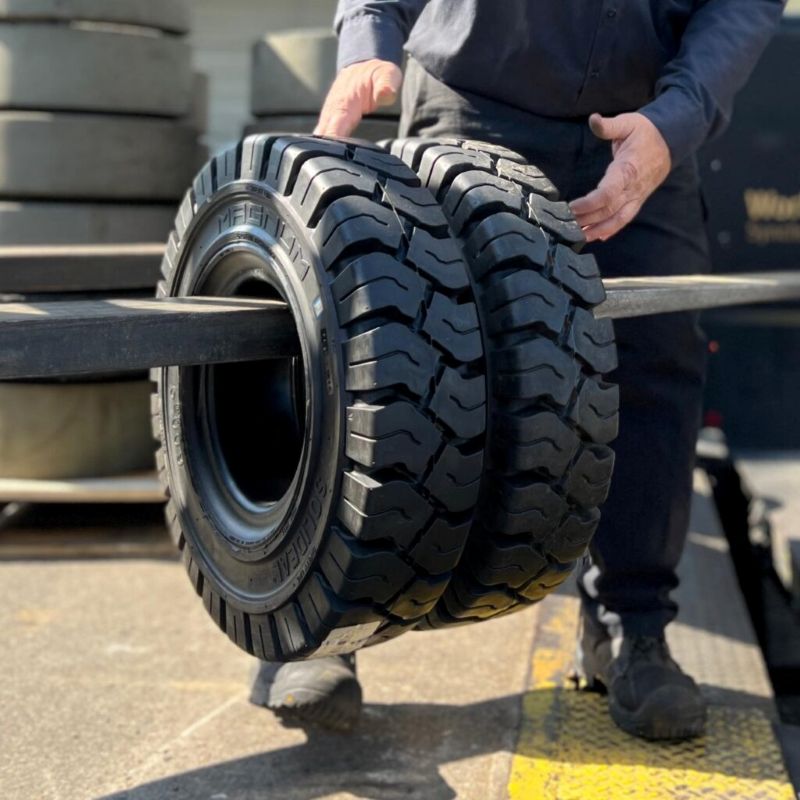
Forklifts lack a traditional suspension system. The tire is suspension. When a tire is in good condition, it compresses slightly under the weight of the load, absorbing the impact of the movement. As tires wear down, they lose their ability to cushion. A solid rubber tire that has lost an inch or two of rubber is no longer absorbing shock; it’s transmitting it. This creates a domino effect of mechanical stress, including:
- Loose Hardware – Constant vibration loosens bolts and electrical connections, leading to phantom electrical issues that are difficult to diagnose.
- Axel Fatigue – The drive axle takes the brunt of the abuse when tires are worn, leading to stress fractures or bearing failures.
- Hydraulic Stress – The jarring motion can cause leaks in hydraulic seals and cylinders.
Enhancing Safety and Reducing Fatigue
Safety is essential in any material handling operation. Worn tires have significantly less traction, which increases stopping distances and the risk of skidding, especially on slick or polished warehouse floors. This danger is compounded when carrying heavy loads, where stability is already a delicate balance.
However, safety is also about the operator’s health. A forklift operator driving on worn-out or flat-spotted tires experiences constant physical jarring. Over an eight-hour shift, this leads to increased fatigue, back pain, and a lack of focus. A tired, uncomfortable operator is far more likely to make a mistake than one who’s alert and comfortable. By prioritizing tire maintenance, you’re directly investing in the well-being and productivity of your staff.
Recognizing the Signs of Wear
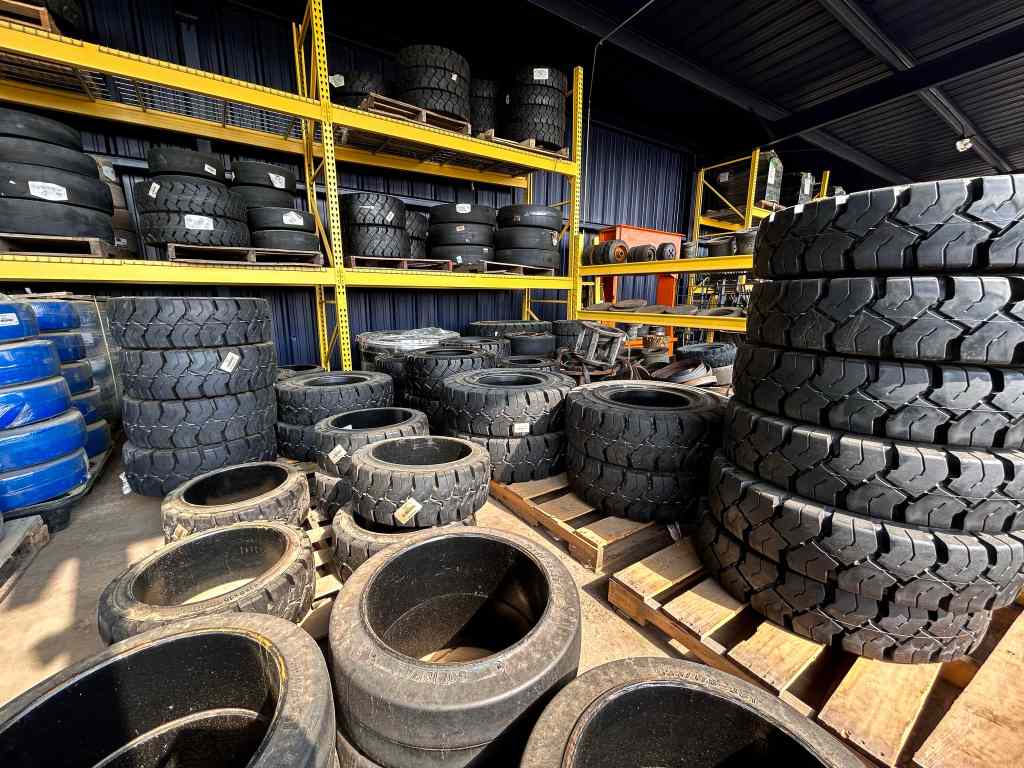
You don’t need to be a mechanic to spot a tire that’s past its prime. However, you do need to know what to look for during your daily walk-around inspections. Different issues point to different root causes, from poor driving habits to cluttered facility floors. Here’s what you should look for:
- The Wear Line and the 2-Inch Rule – Most modern forklift tires come molded with a safety line called the 50% wear line. Once the rubber reaches this line, the tire has lost its ability to safely carry the load and absorb shock. If your tires don’t have this line, use the two-inch rule: if the tire height has dropped more than two inches from its original size, it’s time for a replacement.
- Chunking and Tearing – Chunking occurs when large pieces of rubber fall off the tire body. This is usually caused by running over debris such as metal scraps, broken pallet wood, or dock plates. Tearing, on the other hand, often looks like a slice in the rubber and can be caused by hitting sharp objects. Both issues compromise the lift truck’s stability, resulting in a bumpy and unsafe ride.
- Flat Spots – If you hear a rhythmic thumping sound as the forklift drives, you likely have a flat spot. This typically happens when a forklift is parked overnight with a heavy load still on the forks, or when an operator locks the brakes and slides the tires. Flat spots cause severe vibrations and require immediate attention.
Best Practices for Extending Tire Life
You can significantly extend the service life of your tires by implementing a few operational changes and maintenance routines. These include:
- Maintaining Your Facility Floors – The lifespan of your material handling equipment tires is directly tied to the condition of the driving surface. Cluttered aisles, broken concrete, and metal debris act like cheese graters on rubber tires. Keeping your facility clean and repairing cracks in the flooring will pay dividends in tire longevity.
- Checking Air Pressure – If you operate outdoors with air-filled pneumatic tires, pressure checks are non-negotiable. Under-inflation leads to heat buildup and poor stability, while over-inflation increases the risk of a blowout. Make checking tire pressure a standard part of the pre-shift checklist.
- Operator Training – How an operator drives affects tire wear more than any other factor. Spinning the wheels on startup, taking corners too fast (which grinds the rubber), and abrupt braking all strip away usable tread. Training your team to drive smoothly not only saves fuel but also adds months to your tire life.
- Avoiding Overloading – Every tire has a load rating. Consistently exceeding this rating causes internal heat buildup, which breaks down the chemical bonds in the rubber. This can lead to catastrophic failure, such as the tire separating from the metal band or blowing out entirely.
Your Forklift’s Health Is Riding on Its Tires
Tire maintenance is often viewed as something you only pay for when absolutely necessary. However, waiting until a tire fails is the most expensive way to manage your fleet. The cost of downtime, potential product damage from an unstable load, and the wear-and-tear on the forklift’s transmission far outweighs the price of a proactive tire replacement.
By keeping your aisles clean, training your operators, and inspecting your tires daily, you ensure that your forklifts last longer and your employees stay safer. Take a walk through your facility today and look at the rubber hitting the road. If you see chunking, wear lines, or flat spots on your forklift in Tennessee, Virginia, Kentucky, Georgia, or Washington state, contact Bailey today. As a certified forklift dealer, we provide tire replacement services and a wide range of industrial forklift solutions to keep your operation running smoothly.