Scale Operations with Semi-Automated Material Moving Equipment
For operations directors, the dream of a fully automated “dark warehouse,” where robots run everything without human intervention, is financially out of reach or operationally unnecessary. However, sticking to purely manual processes is rarely sustainable. At Bailey, we offer semi-automated material moving equipment in Tennessee, Virginia, Kentucky, Washington, and Georgia. It serves as a sweet spot for logistics leaders, providing them with a pragmatic, modern warehouse solution that combines the adaptability of human workers with the speed of precision machinery.
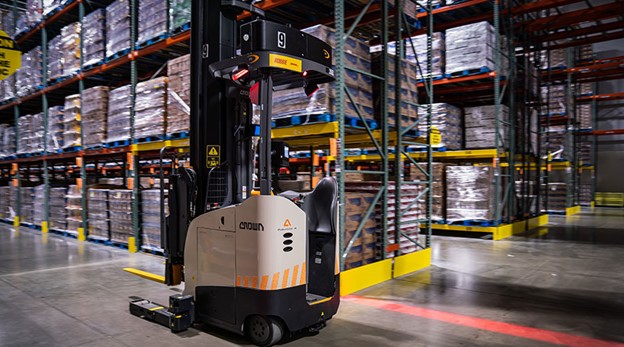
By integrating semi-automated solutions, businesses can optimize their warehouses to enhance productivity and safety without the substantial capital expenditure required for full automation. It’s about enhancing your workforce, not replacing it, creating an environment where technology handles heavy lifting and repetitive tasks, allowing your team to focus on value-added activities.
What Is Semi-Automated Material Handling?
Semi-automation is a system that pairs automated machinery with human intervention. Unlike fully automated environments where machines operate independently, semi-automated systems exist to support employees. The equipment handles the physical transport or storage of goods, while the human operator manages the decision-making or final handling steps.
The beauty of this approach lies in its flexibility. Every facility is different, and semi-automation allows you to customize which parts of your operation need a technological boost. You might automate the transport of goods from receiving to storage using conveyors, but keep the actual put-away process manual. Alternatively, you might use automated storage for small parts, while utilizing forklifts for bulk pallets. This modularity allows operations to scale their technology at a pace that suits their budget and growth trajectory.
The Strategic Advantages of Semi-Automation
Choosing semi-automation is a strategic move that optimizes both cost and performance. Here’s why many warehouses are making the switch:
- Faster Return on Investment – Full warehouse automation requires a staggering upfront investment. It involves complex software integration, massive infrastructure changes, and a long timeline before the system goes live. Semi-automated systems typically cost significantly less and can be implemented faster. Because the initial capital expenditure is lower, operations often see a faster ROI, allowing them to reinvest savings into other areas of the business.
- Improving Accuracy and Reducing Errors – Human error is inevitable in manual operations. Fatigue, distraction, and simple mistakes can lead to mis-picks, which result in costly returns and dissatisfied customers. Semi-automated systems, such as pick-to-light, are designed to guide employees through the process. By using visual cues to indicate exactly where an item is and how many to pick, these systems can improve picking and placing accuracy.
- Enhancing Employee Safety and Ergonomics – Warehouse work is physically demanding. Repetitive bending, reaching, and lifting heavy loads lead to fatigue and injury. Semi-automation takes the physical strain out of the equation. Vertical Lift Modules (VLMs), for example, deliver products directly to the operator at an ergonomic height. This eliminates the need for workers to stoop to the floor or climb ladders to reach inventory.
- Skyrocketing Productivity – Machines don’t get tired, and they don’t slow down at the end of a shift. By offloading repetitive travel and transport tasks to machines, human workers can do more in less time. In manual operations, a significant portion of a picker’s day is spent walking up and down aisles. Technologies like VLMs can increase picking speeds by bringing the inventory to the picker, rather than requiring the picker to search for it.
Key Types of Semi-Automated Equipment
To understand the potential of semi-automation, it’s helpful to examine the specific tools reshaping the industry. These include:
- Conveyor Systems – Conveyors are the arteries of a semi-automated warehouse, efficiently moving products from point A to point B. Transportation conveyors move pallets or cartons to reduce forklift traffic in busy areas, while accumulation conveyors hold products in a queue until downstream equipment or personnel are ready to process them. Sortation conveyors are advanced systems that automatically divert products to specific lanes based on their destination, significantly speeding up the order fulfillment process.
- Vertical Lift Modules (VLMs) – A VLM is an enclosed automated storage and retrieval system that consists of trays stored vertically on both sides of a unit with an extractor in the center. When an operator requests an item, the extractor retrieves the correct tray and delivers it to a window. VLMs are ideal storeroom solutions, not only boosting picking speed but also recovering floor space by utilizing vertical height.
- Pick-to-Light and Put-to-Light – These systems use light modules mounted on racks or shelves to direct operators. When an order is scanned, the lights illuminate the correct bin and display the quantity needed. This technology is ideal for high-density, high-speed picking environments where accuracy is paramount. It creates a seamless workflow that allows the operator to move quickly without stopping to read paper lists or handheld devices.
- Voice Picking – Voice picking technology frees the operator’s hands and eyes. Instead of looking down at a scanner or a clipboard, the worker wears a headset and receives verbal instructions from the system. They confirm tasks verbally, enabling a fluid and continuous workflow. This “heads-up” approach improves safety as workers are more aware of their surroundings, and it can reduce training time for new employees.
- Pallet Runners – Also known as pallet shuttles, these are semi-automated deep lane storage systems. A cart runs on tracks within the racking system to load and retrieve pallets. Forklift operators place the pallet at the entrance of the lane, and the runner does the rest. This system allows for incredible storage density and supports both First-In, First-Out (FIFO) and Last-In, First-Out (LIFO) inventory management.
When Is the Right Time to Upgrade?
Knowing when to upgrade to semi-automation is a critical business decision. While every operation is unique, several clear indicators suggest it might be time to invest in semi-automated material moving equipment. These signs often point to constraints and inefficiencies in your current manual processes that are hindering growth and profitability.
Key signals include struggling with labor constraints, such as attracting or retaining staff, or facing high labor costs that eat into your margins. Other indicators are rising error rates that damage client relationships, throughput bottlenecks causing shipping delays, and running out of floor space while having unused vertical height. Furthermore, if you’re experiencing an increase in workplace injuries related to manual handling, it’s a strong sign that a change is needed. Partnering with experienced equipment consultants can help you identify these signs and develop a clear path forward.
Stay Competitive with Automated Warehouse Solutions
The transition to a semi-automated warehouse doesn’t happen overnight, nor does it require an all-or-nothing approach. Most successful implementations often begin small and gradually expand over time. By adopting semi-automated material moving equipment, you gain the ability to scale your operations efficiently. This form of intralogistics automation creates a safer environment for your staff, reduces costly errors, and ensures that your business remains competitive in an increasingly demanding market. Contact us today to learn more about how semi-automated material handling can enhance your warehouse’s productivity.