

How to Choose the Right Forklift Type for Your Warehouse
Selecting the right forklift for your warehouse involves matching equipment capabilities to your operational needs, ensuring safety, and maximizing efficiency. The wrong choice can lead to damaged goods, safety hazards, and costly downtime.
With numerous forklift types available, making an informed decision requires understanding your warehouse environment, the materials you handle, and the tasks your operators perform daily. This forklift selection guide will walk you through the key considerations to help you choose equipment that enhances productivity while keeping your team safe.
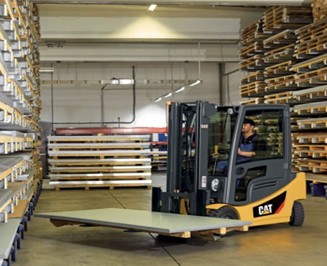
Assessing Your Warehouse Needs
When you partner with Bailey, our experts will help you assess your operational needs to identify the ideal forklift solution. This process goes beyond technical specs to look at the unique context of your business. We’ll help you consider:
- Material Handling – What are the typical dimensions, weight, and packaging of the materials you move? Are you handling uniform pallets or irregularly shaped items that might require specialized attachments?
- Physical Environment – We’ll evaluate your aisle widths, ceiling heights, and door dimensions to see if a narrow aisle forklift or another specialized model is needed. We also take into account any slopes, ramps, or uneven surfaces that could affect performance.
- Operating Conditions – Will your forklifts operate primarily indoors, outdoors, or a mix of both? Your specific conditions, from temperature-controlled warehouses to outdoor yards exposed to rough terrain, play a crucial role in selecting the right equipment.
Key Factors That Influence Forklift Selection
Several technical specifications directly impact which forklift will serve you best. Key factors that influence forklift selection include:
- Load Capacity – Always choose equipment rated above the maximum weight you’ll handle. This safety margin prevents tip-over accidents and equipment strain.
- Lifting Height – If your warehouse uses vertical storage with high racks, you need equipment capable of reaching those levels safely. Measure from the floor to the highest shelf, then add clearance for mast operation and for overhead obstacles such as sprinklers or beams.
- Turning Radius – Aisle width determines how easily a forklift can navigate your space. Counterbalance models need wider turning areas, while reach trucks and order pickers work efficiently in tighter configurations.
- Ground Clearance – This becomes critical when traversing ramps or loading containers. Insufficient clearance causes the forklift to scrape or become stuck, damaging both equipment and infrastructure.
- Operating Environment – Temperature extremes, moisture levels, and air quality all influence equipment selection. Cold storage facilities require forklifts built to handle freezing conditions, while food-grade warehouses may need specialized materials and finishes.
Forklift Types for Different Warehouse Applications
Understanding the strengths of different warehouse forklift applications helps match equipment to tasks. Here’s how different forklift types affect warehouses:
- Counterbalance Forklifts – With a weight at the rear balancing front-loaded pallets, these versatile machines handle general loading, unloading, and transport tasks. They work well for moderate lift heights and standard warehouse applications.
- Order Pickers – Order pickers elevate the operator along with the load, allowing workers to access individual items rather than moving entire pallets. These are essential for pick-and-pack operations that require selecting specific products from high shelving.
- Pallet Jacks – These handle horizontal movement of palletized goods at ground level. Electric models reduce operator fatigue and speed up loading tasks, while manual versions offer a low-cost option for lighter, intermittent use.
- Very Narrow Aisle (VNA) Forklifts – VNA forklifts operate in aisles as narrow as six feet. They maximize storage density but require precise aisle configuration and smooth flooring.
Choosing the Right Forklift Power Source
The debate between electric vs. IC forklifts (internal combustion) significantly impacts operational costs, environmental considerations, and performance characteristics. Here’s a deeper look at how they differ:
- Electric Forklifts – These run on batteries, producing zero emissions and operating quietly, which makes them ideal for indoor environments. They require less maintenance than IC models, since they have fewer moving parts and no engine servicing. However, electric models typically have higher upfront costs and require charging infrastructure.
- Internal Combustion Forklifts – IC forklifts run on propane, diesel, or gasoline. They deliver powerful performance and don’t require downtime for charging. IC forklifts handle outdoor conditions well and perform reliably in extreme temperatures. The trade-offs include emissions, higher noise levels, and more frequent maintenance requirements.
Ergonomics, Safety, and Compliance Considerations
Operator comfort directly affects productivity and safety. Ergonomic features reduce fatigue during long shifts and minimize the risk of repetitive strain injuries. Look for adjustable seats, intuitive controls, and good visibility. Some forklifts offer suspended cabins that absorb vibrations, while others include climate control for extreme temperatures.
New modern forklifts come equipped with Operator Assist Systems (OAS) that improve safety and control. These technologies can include stability control, automatic speed limiters, and operator presence sensors that prevent movement when the seat is empty. Consider a model with enhanced visibility to reduce blind spots.
Compliance with OSHA regulations and industry standards isn’t optional. Your forklift must meet load capacity guidelines, and operators must be certified for the specific equipment class they operate. At Bailey, we partner with you to ensure your individual vehicles and fleets stay up-to-date with the latest regulations, keeping your operations safe and compliant.
Matching Forklifts to Specific Warehouse Scenarios
The ideal forklift for your warehouse depends entirely on your operational needs. Here’s a breakdown of common warehouse scenarios and the types of forklifts best suited for each:
- High-Density Storage Facilities – These facilities benefit from VNA forklifts or reach trucks that maximize vertical space. If you’re optimizing storage capacity in a limited footprint, these narrow aisle forklifts allow you to reduce aisle width while maintaining safe access to inventory.
- Cold Storage Operations – These require forklifts built to withstand freezing temperatures without performance degradation. Electric models designed for cold environments protect batteries from temperature extremes, while operators need heated cabs for comfort and safety.
- Manufacturing Facilities – These facilities often combine multiple forklift types. You might use counterbalance models for moving raw materials, order pickers for accessing components, and heavy-capacity forklifts for finished goods.
- E-Commerce Warehouses – E-commerce warehouses rely heavily on order pickers and reach trucks to quickly access diverse inventory. Ergonomic features become particularly important here since operators spend entire shifts elevating, picking, and descending repeatedly.
Support Your Growth With the Right Forklift
Selecting the right forklift type requires balancing immediate needs with future growth. The team at Bailey can help you document your current operations and identify the ideal forklift for your needs. Contact your nearest branch in Knoxville, Chattanooga, Nashville or Seattle today to schedule a discovery meeting. The best forklift is the one that keeps your operations running smoothly, safely, and efficiently.
Take time to carefully assess your options. Consult with the material handling experts at Bailey who understand warehouse forklift applications and can recommend equipment based on real-world performance in a similar environment. Choose wisely, and the right equipment will serve your business reliably for years to come.